A yacht can look right in a photograph and still be wrong for the way you want to use it. Before comparing listings, picture an ordinary day aboard: who is coming, how long you will stay out and what you will spend most of that time doing.
That picture is a more useful starting point than a length or a brand alone. It gives a purchase brief direction and makes the reasons for choosing one vessel over another easier to assess.
Start with the day, then the boat.
Frequent coastal outings, quiet weekends, fishing, entertaining friends and longer passages ask different things of a vessel. Decide which uses are central and which are occasional. Consider whether you expect to operate the boat yourself or make separate arrangements for a skipper or crew.
Tell your adviser how often you intend to use it and where you expect to keep it. A boat that suits the intended outing but is inconvenient to access may be used less than expected.
Read the layout before the dimensions.
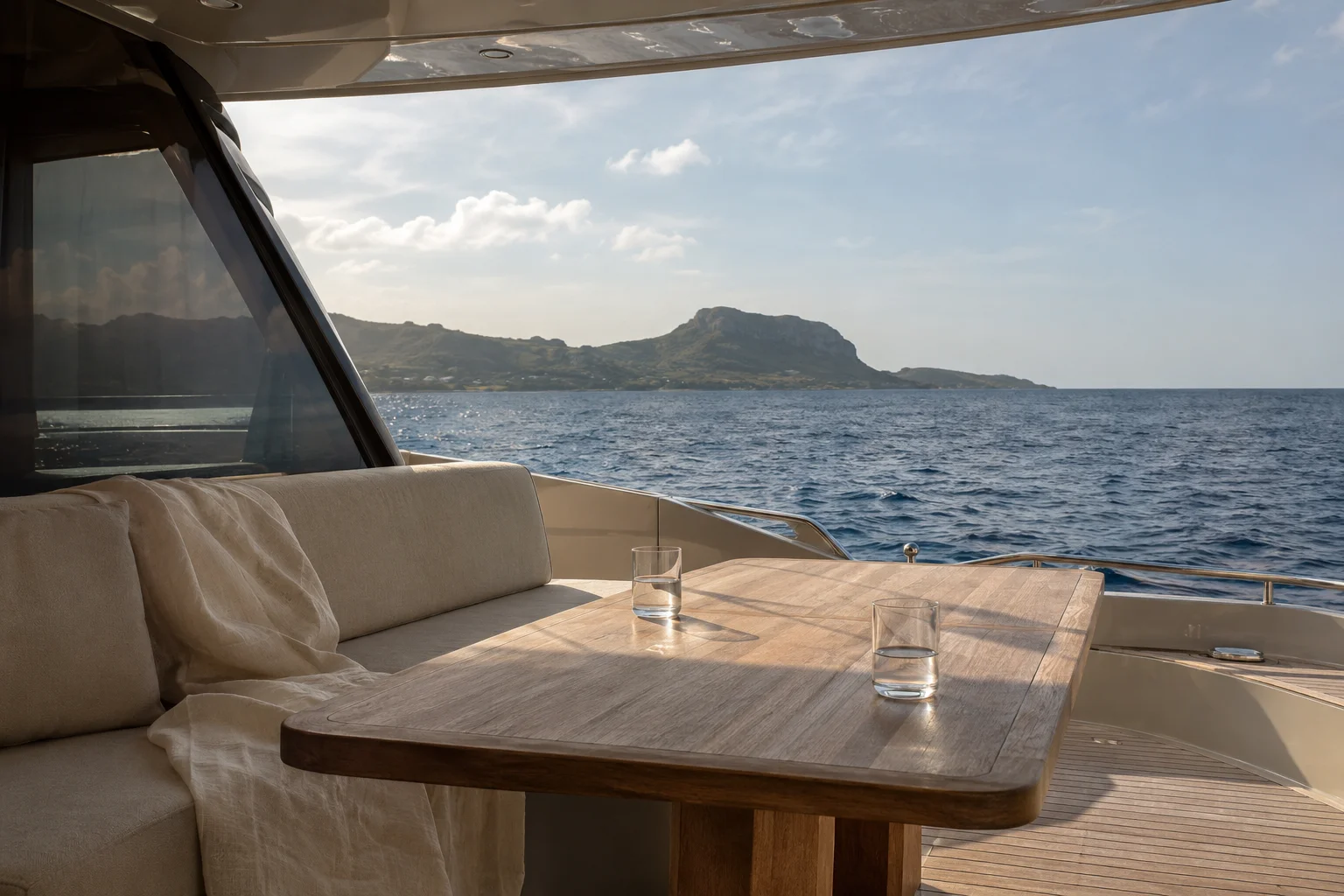
Look at the areas where your guests will actually sit, move and spend time. Shaded seating, access to the water, the boarding arrangement, a usable toilet and room to store belongings can have more effect on an afternoon aboard than an impressive specification line.
For overnight use, study the cabin and bathroom arrangements. For day use, pay particular attention to the deck. Ask for clear photographs and a floor plan where available, then compare them with the vessel during an inspection.
Discuss the whole ownership arrangement.
The purchase price is only one part of the decision. Ask about the practical arrangements for keeping, maintaining and using the boat: berth or storage access, servicing, insurance, cleaning and any crew requirements. Obtain current quotations from the relevant providers rather than relying on a general estimate.
These questions do not have to turn the first conversation into a technical exercise. They help establish whether a shortlist is realistic before you invest time in viewings.
Ask for information that can be checked.
Request accurate vessel and engine identifiers, the equipment inventory and relevant maintenance records. Discuss an independent inspection or survey appropriate to the vessel and the transaction. Treat a brochure and a viewing as a starting point for enquiries, rather than as substitutes for verification.
In Mauritius, the Tourism Authority distinguishes private and commercial pleasure-craft licensing and publishes separate ownership-change information. Confirm the applicable process for your intended use with the Authority and the professional handling the transaction. The Tourism Authority pleasure-craft section is a useful official starting point.
A useful brief is a short one.
Begin with the vessel type, your intended use, a budget range, the preferred timing and any features you consider essential. Include where the vessel is expected to be based and whether you are open to alternatives.
Stingaree Yachts receives yacht and boat purchase enquiries in Mauritius. Share the days you want to have aboard, and the search can begin with the right questions.